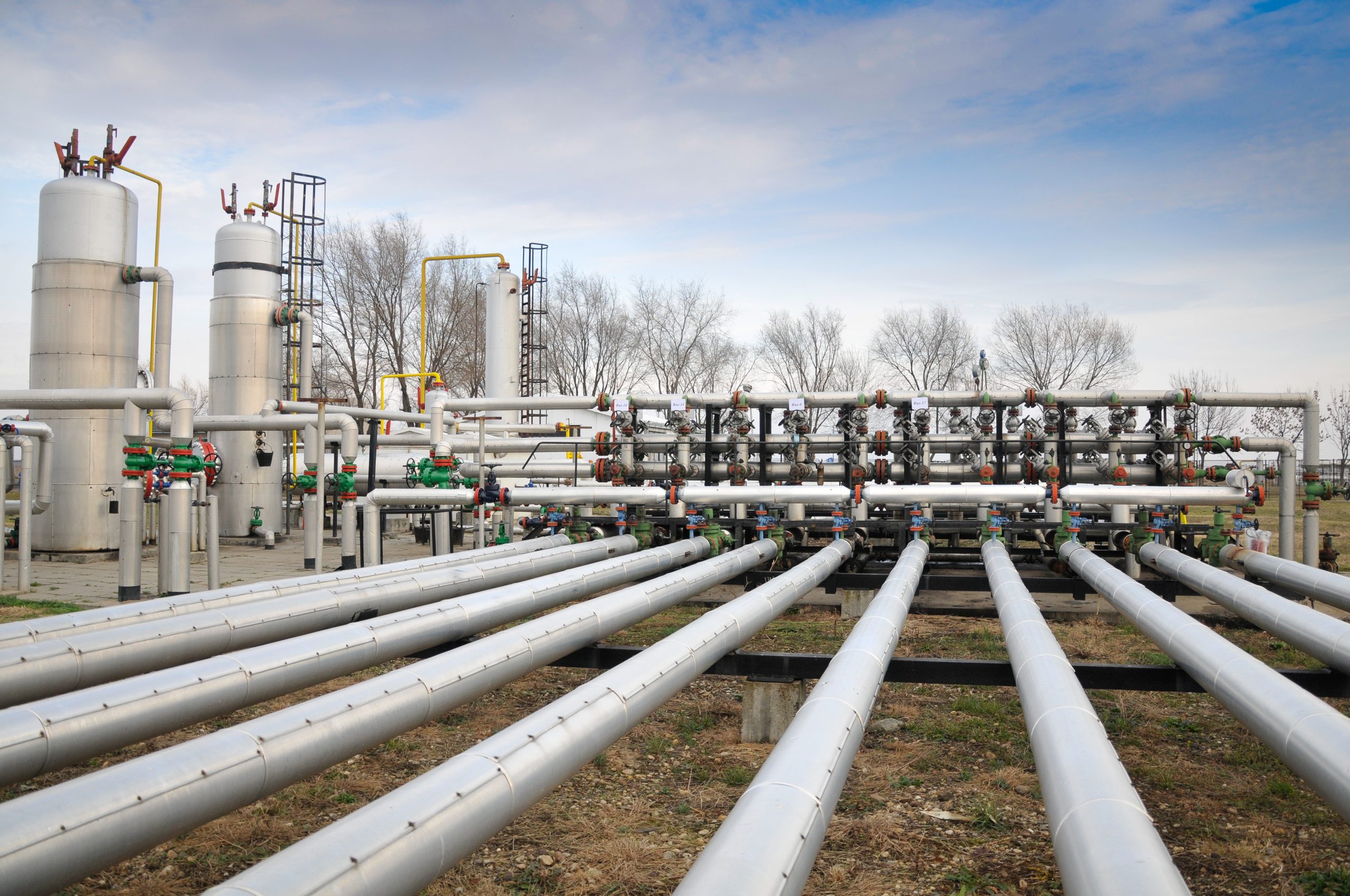
Monitoring Methane Leaks in Natural Gas Systems
Supporting Safety, Compliance, and Operational Integrity with Dynament Infrared Gas Sensors
Methane leak detection in natural gas systems helps identify potentially hazardous gas releases around pipelines, valves, compressors, storage facilities, and distribution infrastructure. Continuous monitoring enables operators to detect methane at critical points, activate alarms, and respond before a leak creates a serious safety or operational risk.
Dynament non-dispersive infrared sensors provide reliable methane measurements for integration into fixed, portable, and remotely powered gas monitoring systems used throughout natural gas infrastructure.
Contents
Why Methane Leak Detection Matters
Methane (CH₄) is the primary component of natural gas. When released into the surrounding environment, it can create several risks:
- Fire and explosion: Methane can form flammable mixtures when combined with air at certain concentrations.
- Personnel safety: Undetected releases can expose workers to hazardous conditions, particularly in enclosed or poorly ventilated areas.
- Operational integrity: Leaks from pipelines, valves, or process equipment result in product loss, reduced efficiency, and unplanned maintenance.
- Regulatory compliance: Natural gas operators must monitor and manage gas releases in accordance with relevant safety and environmental requirements.
- Environmental impact: Methane emissions contribute to global warming, making the early identification and management of leaks increasingly important.
Reliable methane monitoring supports a faster response to gas releases while helping operators protect personnel, equipment, and the surrounding environment.
Key Challenges in Methane Leak Detection
Methane leak detection across natural gas infrastructure presents several technical and operational challenges. Monitoring systems must provide reliable measurements while operating around pipelines, processing equipment, storage facilities, and other potentially demanding environments.
Key challenges include:
- Different measurement ranges: Leaks may range from trace ppm to percent volume / LEL levels.
- Harsh Environments: Sensors must operate in variable temperatures, humidity, contaminants, and pressure.
- Explosive Atmospheres: Equipment must meet ATEX, IECEx, or other explosion-proof certifications for Zones 1/2.
- Fast Response & Low Drift: Leaks must be detected quickly, over a long service life, and with minimal recalibration.
- Integration into Safety Systems: Alarm outputs, data interfaces, and diagnostics are needed for control systems.
Without an effective methane monitoring strategy, leaks may remain undetected for longer, increasing safety risks, product loss, maintenance costs, and methane emissions.
Where Methane Leaks Can Occur?
Natural gas infrastructure contains numerous connections, seals, and mechanical components where leaks may develop over time.
Common monitoring locations include:
- pipeline connections, joints, and flanges;
- valves, seals, and pressure regulators;
- compressor stations;
- gas processing equipment;
- storage vessels and transfer points;
- LNG loading and unloading areas;
- metering stations;
- enclosed plant rooms and equipment housings.
The most appropriate monitoring locations depend on the equipment layout, ventilation, gas behaviour, and site-specific risk assessment. Fixed-point sensors are typically positioned close to potential release sources and connected to a wider alarm or control system.
Methane Monitoring Requirements
Methane leak detection systems must operate reliably under the conditions found across natural gas infrastructure. Depending on the application, system designers may need to consider:
Measurement range
Methane may need to be measured within the lower explosive limit range for safety monitoring or at higher percentage-by-volume concentrations for process and gas analysis applications.
Selecting the appropriate range is essential. A sensor designed for high-concentration measurement may not provide the resolution required for lower-range monitoring, while a low-range sensor may not be suitable for methane-rich environments.
Environmental conditions
Temperature, humidity, pressure, condensation, dust, and other contaminants can affect sensor performance. Monitoring equipment should be selected and integrated according to the environmental conditions expected at the installation point.
Response and stability
A gas monitoring system must respond quickly enough to support the required alarm or control action. Long-term stability is also important for reducing maintenance requirements and maintaining dependable measurements throughout the sensor’s operating life.
Hazardous-area requirements
Natural gas facilities may contain classified hazardous areas. Sensors, housings, detectors, and associated equipment must therefore be selected in accordance with the certification and installation requirements of the complete system.
System integration
The sensor must communicate effectively with the host detector, alarm panel, or control system. Output format, diagnostics, calibration requirements, power consumption, and sensor configuration should all be considered during the design stage.
Why Use NDIR Sensors for Methane Monitoring?
Non-dispersive infrared technology measures methane by detecting its absorption of infrared light at specific wavelengths. The sensor converts this absorption into a methane concentration reading that can be used by the surrounding monitoring system.
NDIR methane sensors offer several advantages for natural gas applications:
- Oxygen-independent measurement: NDIR sensing does not require oxygen to detect methane.
- Resistance to catalytic poisoning: Because measurement is optical rather than based on combustion, NDIR sensors are not affected by the poisoning mechanisms associated with catalytic sensors.
- Long-term stability: The technology supports reliable continuous monitoring with low drift.
- Multiple measurement ranges: Sensor configurations are available for lower-range and high-concentration methane measurement.
- Flexible power options: Different power modes support fixed, portable, battery-powered, and remote monitoring equipment.
- Straightforward OEM integration: Integrated optics, electronics, and firmware provide a temperature-compensated and linearised output.
The sensor is one component of the complete methane leak detection system. The equipment manufacturer or system integrator must address alarm logic, communications, enclosures, certification, and system-level performance.
Selecting the Right Methane Sensor
The correct sensor configuration depends on the measurement objective and operating environment.
| Application requirement | Selection consideration |
| Flammable gas safety monitoring | Measurement range appropriate for methane within the LEL range |
| High-concentration methane measurement | Percentage-by-volume measurement range |
| Fixed continuous monitoring | Long-term stability, response time, and system interface |
| Portable or remotely powered equipment | Low or ultra-low power consumption |
| Hazardous-area installation | Appropriate certified sensor, housing, and complete system design |
| Variable operating conditions | Temperature range and environmental protection |
| OEM detector integration | Output protocol, calibration, diagnostics, and physical format |
System designers should also consider other gases that may be present, expected methane concentrations, airflow, maintenance access, and any application-specific performance requirements.
Dynament Sensors for Natural Gas Monitoring
Dynament manufactures NDIR gas sensors for integration into OEM gas detection and monitoring equipment.
Hydrocarbon Infrared Platinum Series
Dynament Hydrocarbon Infrared Gas Sensors integrate the optics, electronics, and firmware required to provide a temperature-compensated, linearised methane or propane output.
Available configurations include:
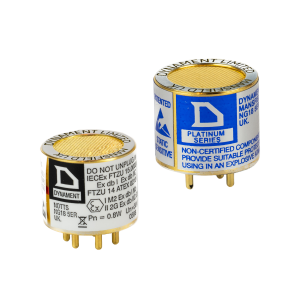
- methane measurement ranges from 0–5% volume to 0–100% volume;
- propane measurement from 0–2% volume;
- high, regular, low, and ultra-low power options;
- standard operation from –20°C to +50°C;
- extended temperature options from –40°C to +75°C;
- Digital communication for integration, configuration, and diagnostics;
- Industrial Ex d IIC, Mining M1, UL-approved and non-certified options, depending on the selected model.
Low-Power Dual-Gas Methane and Carbon Dioxide Sensors
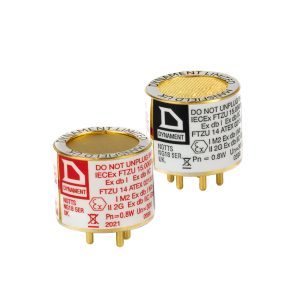 For equipment that needs to measure methane and carbon dioxide simultaneously,
Dynament Low-Power Dual-Gas Sensors combine both measurements within a single compact NDIR sensor package.
Operating at 15 mA and 45 mW at 3 V, these sensors are suited to portable,
battery-powered, and remotely deployed monitoring equipment.
Selected configurations can measure methane up to 100% volume while also providing carbon dioxide and characterized propane measurements.
Gas Sensor Housings and Fixed Detectors
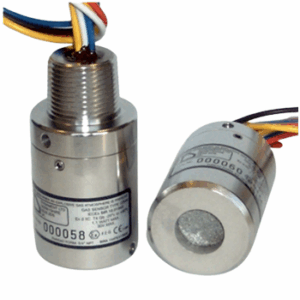 The Dynament GSH4 gas sensor housing is an Ex d-certified component designed to accommodate infrared and other gas-sensing technologies.
It must be installed within an appropriately certified enclosure as part of the complete gas detection system.
Dynament also provides fixed gas detector options for applications requiring complete loop-powered, intrinsically safe, or flameproof monitoring equipment.
Applications Across Natural Gas Infrastructure
Dynament methane and hydrocarbon sensors can be integrated into monitoring equipment used across:
- Natural gas transmission and distribution: Monitoring around pipelines, connections, valves, and pressure-regulation equipment.
- Gas processing and compressor stations: Identifying releases around compressors, seals, and process equipment.
- Gas storage facilities: Monitoring storage vessels, transfer areas, and associated infrastructure.
- LNG facilities: Detecting methane around loading areas, transfer equipment, and processing systems.
- Metering stations: Monitoring valves, meters, regulators, and customer connection points.
- Refineries and petrochemical facilities: Supporting hydrocarbon detection around process equipment and classified areas.
Supporting Reliable Methane Leak Detection
Methane leak detection is critical to the safety, efficiency, and operational integrity of natural gas infrastructure. Effective monitoring depends on more than selecting an individual sensor. Measurement range, sensor placement, environmental conditions, certification, system integration, and maintenance requirements must all be considered as part of the complete monitoring strategy.
Dynament’s NDIR methane sensors provide flexible measurement ranges, power options, and certification variants for integration into natural gas monitoring equipment. From full-range hydrocarbon sensors to low-power dual-gas configurations, these solutions help OEMs and system designers develop dependable monitoring systems for fixed, portable, and remote applications.
When integrated into an appropriately designed gas detection system, reliable methane measurement can support earlier leak identification, protect personnel and equipment, reduce product loss, and help operators manage methane emissions.
Download the Platinum Series Hydrocarbon Sensor datasheet.
Contact our experts to discuss your application requirements.
Frequently Asked Questions
What type of sensor is used to detect methane in natural gas systems?
NDIR sensors are commonly used for continuous methane monitoring because they measure methane through infrared absorption, operate without oxygen, and are resistant to catalytic poisoning. The appropriate technology depends on the required range, response, operating conditions, and system design.
Where should methane sensors be installed?
Sensors should be positioned near credible leak sources such as valves, flanges, compressors, regulators, and transfer points. Airflow, ventilation, gas movement, accessibility, and the site risk assessment should determine the final placement.
Should methane be measured in %LEL or % volume?
The correct unit depends on the application. Percentage of LEL is generally associated with flammable gas safety monitoring, while percentage by volume is used for higher-concentration or process measurements. The sensor range should be selected based on the required alarm and measurement objectives.
Can an NDIR methane sensor operate without oxygen?
Yes. NDIR sensors detect methane by measuring infrared absorption and do not rely on oxygen for the sensing reaction. This makes them suitable for both air and oxygen-reduced gas environments, subject to the specifications of the selected sensor and complete monitoring system.
